Scottish salmon exporters, farmers and young people could benefit from a new agreement between the UK and European Union aimed at removing some of the barriers created by Brexit.
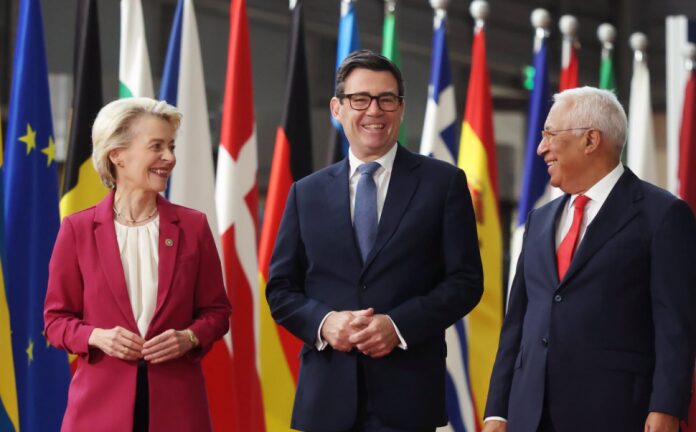
Prime Minister Andy Burnham met European Commission President Ursula von der Leyen and European Council President António Costa in Brussels on Friday, 20 November, where the two sides concluded negotiations on three agreements covering food and agricultural trade, carbon emissions and opportunities for young people.
The UK Government estimates the package could add up to £17 billion annually to the British economy by 2040, equivalent to around 0.5% of GDP. No separate estimate has been published for Scotland.
The measures represent a step forward in relations with the EU, ten years after the Brexit referendum, although most changes will not take effect immediately.
Burnham said: “Ten years on from Brexit, today we open a new chapter. Repairing a broken status quo with a Britain that is closer to Europe.”
He added: “This deal is a win-win – and it cuts costs for business, helps with the cost of the weekly shop, and creates opportunities for young people.”
New opportunities for Scottish food exports
The most immediate economic opportunities for Scotland are likely to come from an agreement covering food, agricultural products, animals and plants.
The UK will align with relevant EU standards, allowing routine border inspections and much of the paperwork associated with exporting these products to be removed.
Export Health Certificates, which can cost businesses up to £200 each, will no longer be required for goods covered by the arrangements.
This could be particularly important for Scotland’s salmon industry, which has faced increased costs and delays transporting fresh fish to European customers.
Salmon Scotland estimates that Brexit-related trade barriers could be costing the sector £130 million annually in potential EU sales, based on the market share it enjoyed before Brexit.
The figure represents an estimate of lost opportunities rather than a guaranteed increase in exports under the agreement.
Salmon Scotland chief executive Tavish Scott said: “Scotland’s salmon sector will benefit greatly from improved trading arrangements between the UK and the EU.
“After ratification, this will reduce costs, border checks and the time taken for European customers to enjoy nutritious Scottish salmon on their dinner plates, where it is in increasing demand.”
Scottish agriculture could also benefit, with the agreement reopening EU markets to seed potatoes that have faced restrictions since Brexit.
Producers of beef, lamb and dairy products are expected to face fewer export checks.
NFU Scotland welcomed the agreement but warned that questions remain over animal disease controls and the implications of adopting future EU regulations.
Director of policy Jonnie Hall said: “The benefits of improved trade are considerable, but how this agreement is implemented will be critical.”
The food-trade agreement is scheduled to take effect on 1 March 2028, subject to the necessary UK and EU procedures.
Young Scots to gain new European opportunities
The summit also confirmed a Youth Experience Scheme allowing people aged 18 to 31 to live, work, study or travel in participating EU countries for up to three years.
The reciprocal programme will accommodate up to 100,000 participants annually from each side, offering opportunities for young Scots who previously benefited from freedom of movement.
Participants will require visas, but will not need a job offer before applying.
The scheme does not restore freedom of movement and will not provide access to benefits or the right to bring dependants.
The UK Government expects the first participants to travel no later than January 2030.
The summit also reaffirmed the UK’s participation in Erasmus+ in 2027, supporting educational exchanges involving universities, colleges and other institutions.
Negotiations over university tuition fees remain unresolved.
The EU wants an agreement on the fees charged to students studying in each other’s countries. Both sides have committed to reaching a settlement within six months.
European leaders have indicated that final approval of the wider package could depend on resolving the dispute, although the UK Government maintains that the three agreements have been concluded.
Industry, fishing and energy
The third agreement will link the UK’s carbon emissions trading scheme with the EU system, potentially reducing costs for exporters affected by carbon border charges.
The UK Government estimates the arrangement could contribute £3.8 billion annually to the British economy by 2040.
It could benefit Scottish businesses involved in energy-intensive manufacturing, although chemicals company INEOS, which operates at Grangemouth, has warned that alignment risks increasing carbon costs for UK industry.
The two sides aim to introduce the linked system in 2028.
The summit also confirmed the continuation of reciprocal fishing access arrangements until June 2038, rather than announcing new fishing rights.
Further negotiations are planned on electricity market cooperation, which could have implications for Scotland’s renewable energy sector.
Other measures include closer cooperation on European security, migration and organised crime, while discussions will continue on easing restrictions affecting touring musicians and performers.
Scottish holidaymakers will eventually benefit from the return of reusable EU pet passports, removing the need to obtain a new animal health certificate for each journey.
Scottish Government reaction
Scotland’s Minister for Europe and External Affairs, Stephen Gethins, welcomed progress but argued that the agreement did not go far enough.
He said: “Scotland is a European nation, and we support any immediate steps towards a reset of the partnership with our neighbours in Europe, particularly where they strengthen our security and help people and businesses struggling with everyday costs.”
He added that the measures would only address a small part of the economic damage he attributed to Brexit and called for a closer relationship with the Single Market and Customs Union.